






March 27, 2026

Rack Attack Team
Summer 2026 is shaping up to be one of the biggest seasons yet for road trips, trail riding, and weekend getaways and having the right hitch bike rack can make or break your experience.
Whether you’re hauling high-end mountain bikes, heavy e-bikes, or loading up the whole family’s gear, not all racks are created equal. Some excel in durability, others in ease of use, and a few stand out for their innovative design.
In this guide, we’ve narrowed it down to the top 5 hitch bike racks for Summer 2026, based on real-world usability, build quality, and overall value. Whether you're a solo rider or planning group adventures, there’s a perfect option here for you.
Quick Comparison
| Rack | Capacity | Type | Best For | Notable Feature |
|---|---|---|---|---|
| Thule T2 Pro XTR | 2 bikes | Platform | All-around use | Tool-free install |
| Thule Epos | 2 bikes | Platform | Premium users | Frame-free attachment |
| Thule EasyFold XT | 2 bikes | Platform | E-bikes | Fully foldable |
| Kuat Piston Pro | 2 bikes | Platform | Ease of use | One-touch arms |
| Thule Apex XT 4 | 4 bikes | Hanging | Families | Budget-friendly |
Thule T2 Pro XTR (2”) - Best Overall
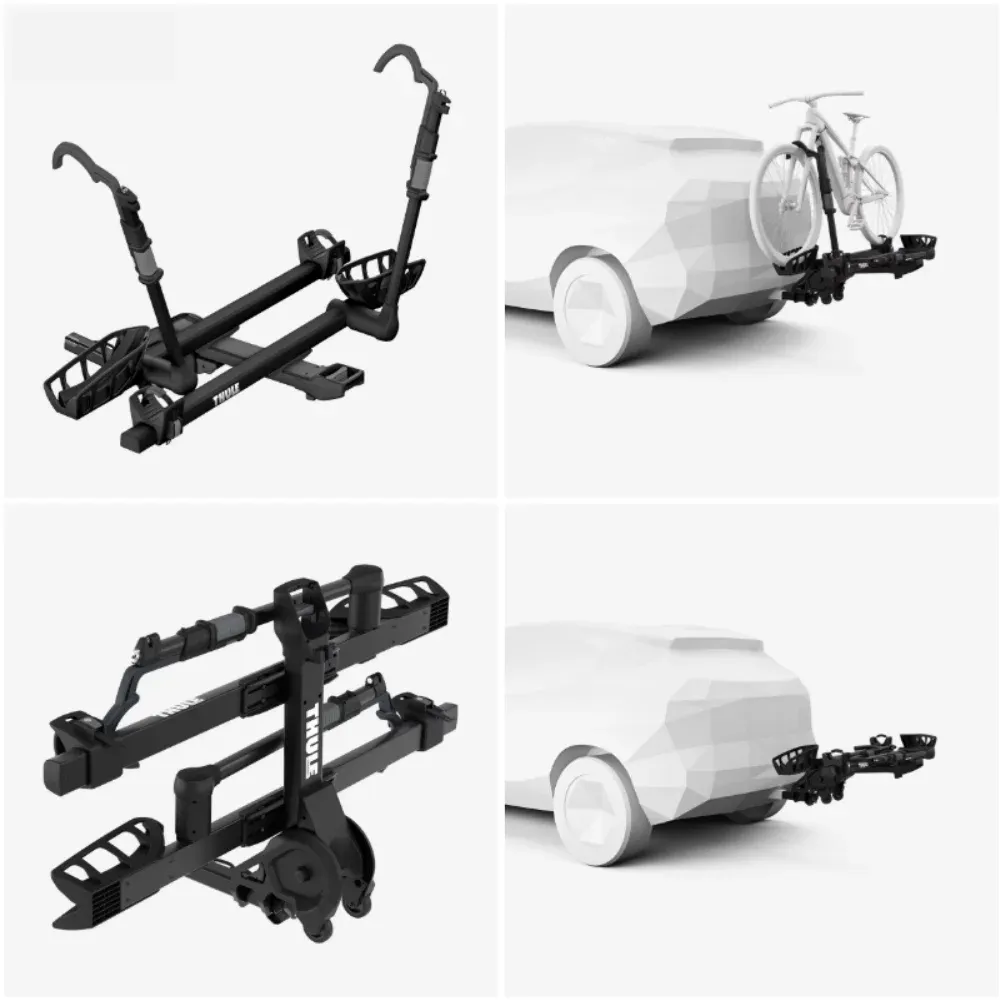
If you’re looking for a dependable, do-it-all rack, the Thule T2 Pro XTR continues to lead the pack in 2026. It’s built for riders who want something they can install once and trust for everything from quick city rides to long highway trips.
What makes it stand out is how balanced it feels. It’s sturdy without being overly complicated, and it works with a wide range of bikes without requiring constant adjustments. The platform design holds bikes by the wheels, which helps protect frames and keeps everything stable during transport.
- Tool-free install with a secure, wobble-free fit
- Ratcheting arm system that avoids frame contact
- Built-in wheels for easier handling off the vehicle
- Tilt function for rear trunk access
In everyday use, it’s one of the most stress-free racks you can own. Loading is quick, spacing between bikes is generous, and once everything is locked in, there’s very little movement.
- Trade-offs: Heavier than entry-level racks
- Premium price point
Best for: Riders who want one rack that consistently performs across all use cases.
Thule Epos (2 Bike) - Best Premium / Most Innovative
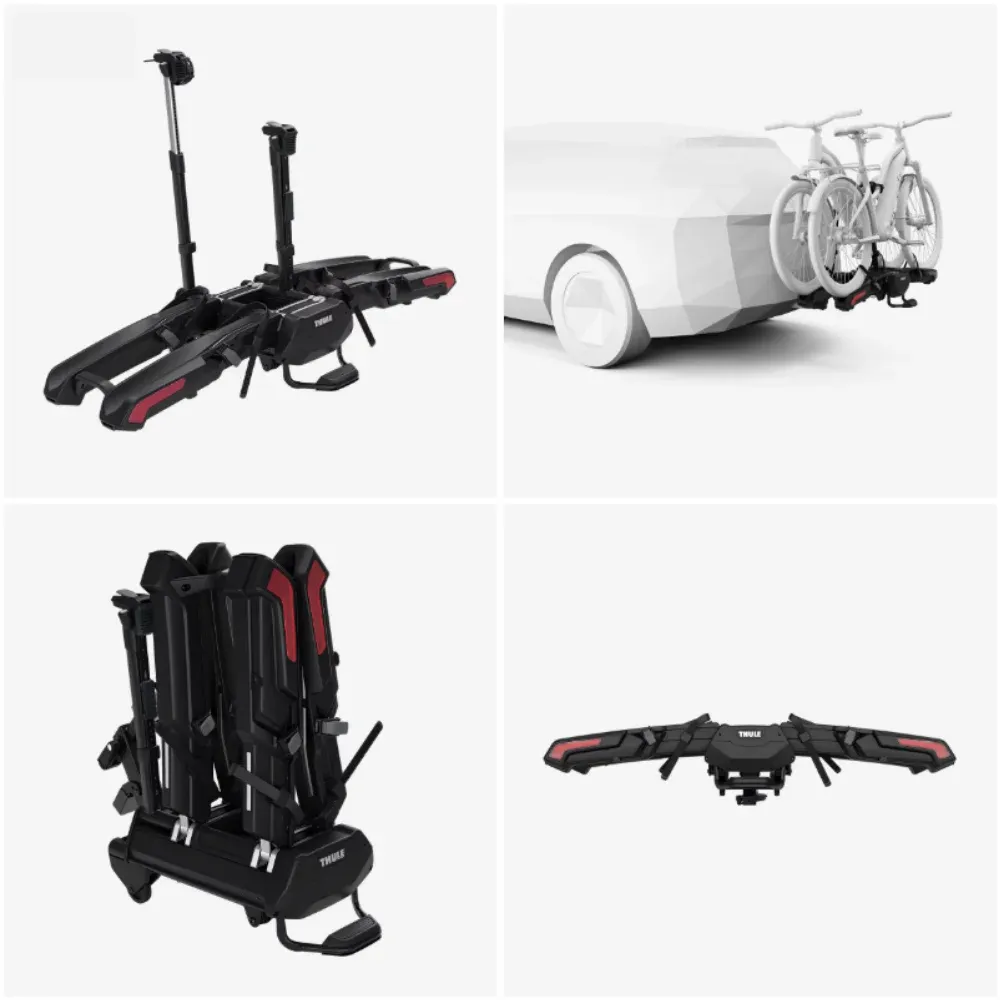
The Thule Epos is designed for riders who want flexibility above all else. Instead of relying on traditional wheel clamps, it uses adjustable arms that attach directly to the bike’s frame or rear triangle.
This makes a big difference when you’re dealing with non-standard bikes like full-suspension MTBs, step-through frames, or heavier e-bikes. You’re not forced into a fixed position; you can adapt the setup to your bike.
- Frame-based attachment system for maximum flexibility
- Works with a wide range of bike geometries
- Easier spacing when carrying two bikes
- Premium materials and modern design
Once you get used to the system, it can actually feel more intuitive than traditional racks especially when loading multiple bikes that don’t normally “fit nicely” together.
- Higher learning curve initially
- One of the most expensive options
Best for: Riders with high-end or unconventional bikes who want total control over loading.
Thule EasyFold XT - Best for E-Bikes
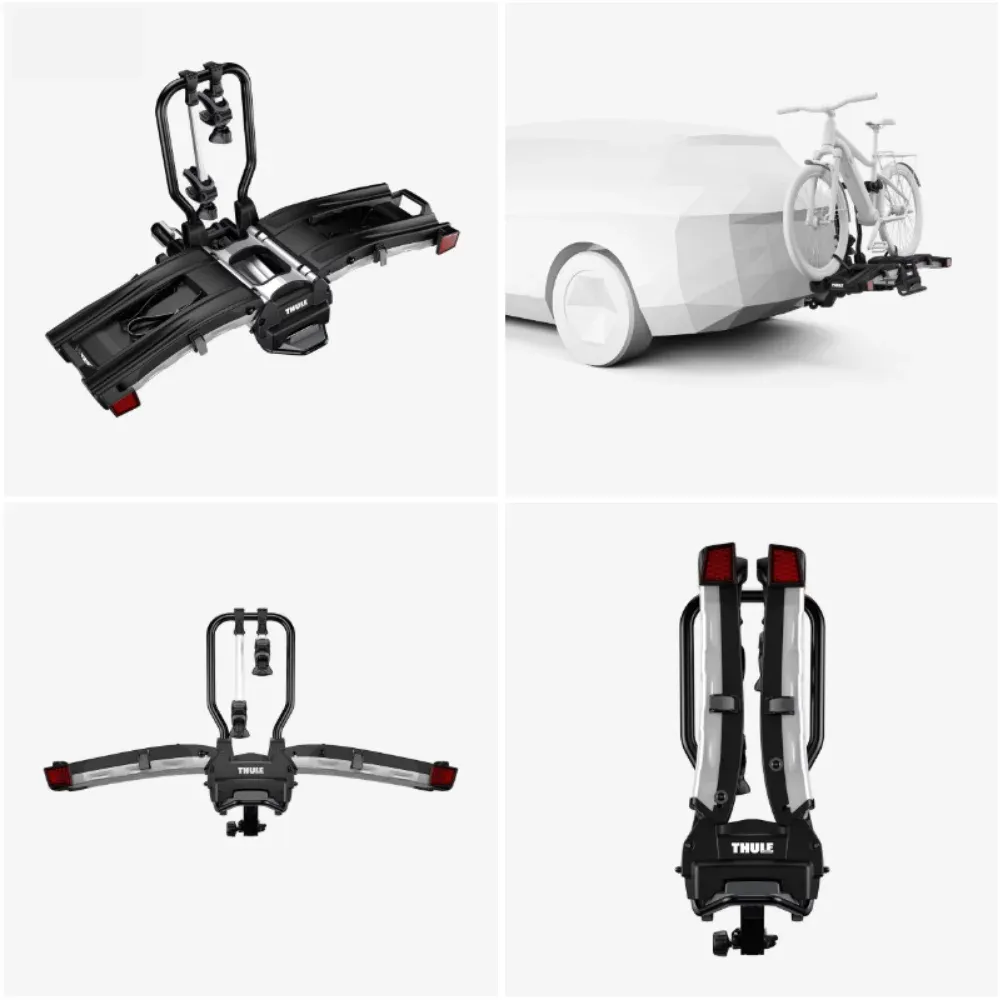
For heavier bikes, especially e-bikes, the Thule EasyFold XT is one of the most practical solutions available. It’s designed with weight capacity and portability in mind, two things that matter a lot more than people expect.
The biggest advantage here is its foldable design, which makes storage and handling significantly easier compared to bulkier platform racks.
- High weight capacity for e-bikes
- Fully foldable for compact storage
- Stable platform with heavier loads
- Optional ramp for easier loading
In real-world use, it feels very secure even over long distances.
- Bulkier when open
- Slightly slower loading
Best for: E-bike owners or riders needing portability.
Kuat Piston Pro - Best Design & Ease of Use
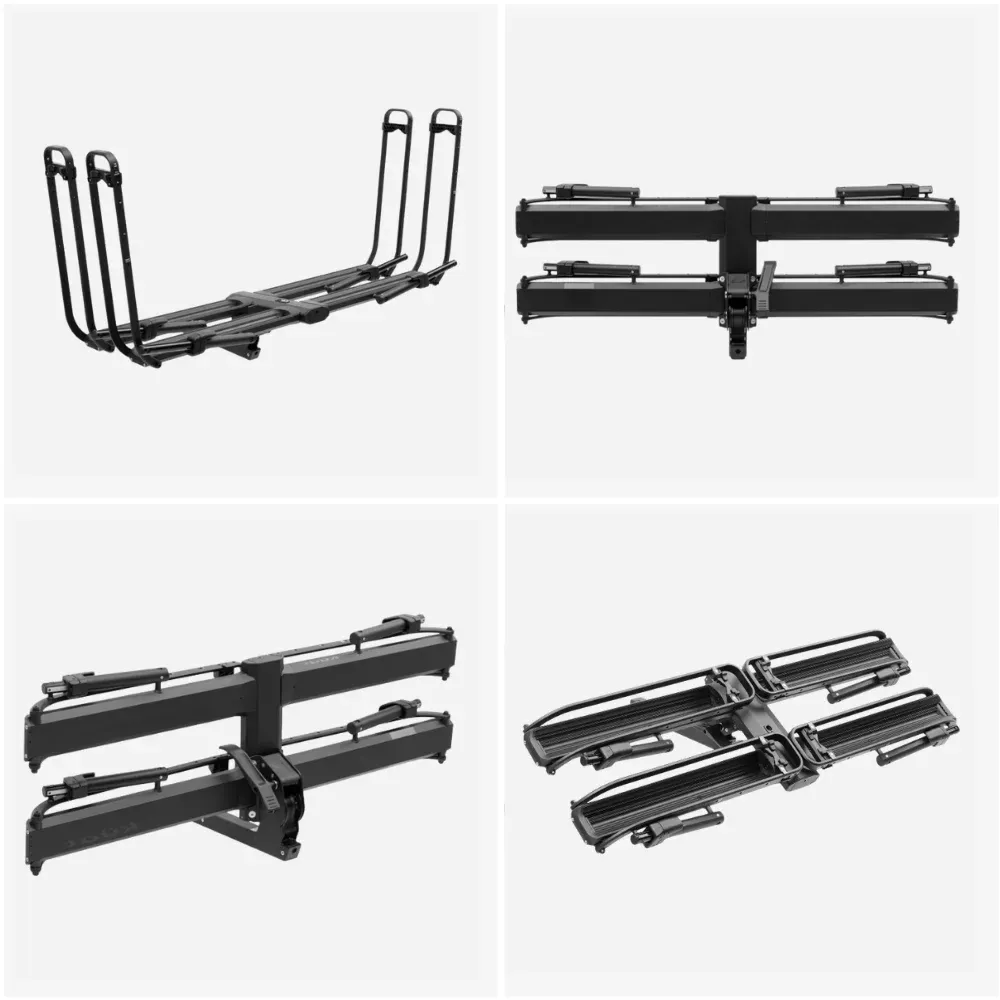
If ease of use is your top priority, the Kuat Piston Pro is hard to beat. This rack is all about reducing effort with smooth, intuitive operation.
Its one-touch pneumatic arms are the main highlight. Instead of adjusting levers manually, you simply press and position making loading feel quick and almost effortless.
- OneTap hydraulic arms for fast loading
- No frame contact
- Premium materials
- User-friendly design
It’s also one of the best-looking racks available.
- Premium pricing
- More features than casual riders may need
Best for: Riders who value convenience and design.
Thule Apex XT 4 - Best Budget / Family Option
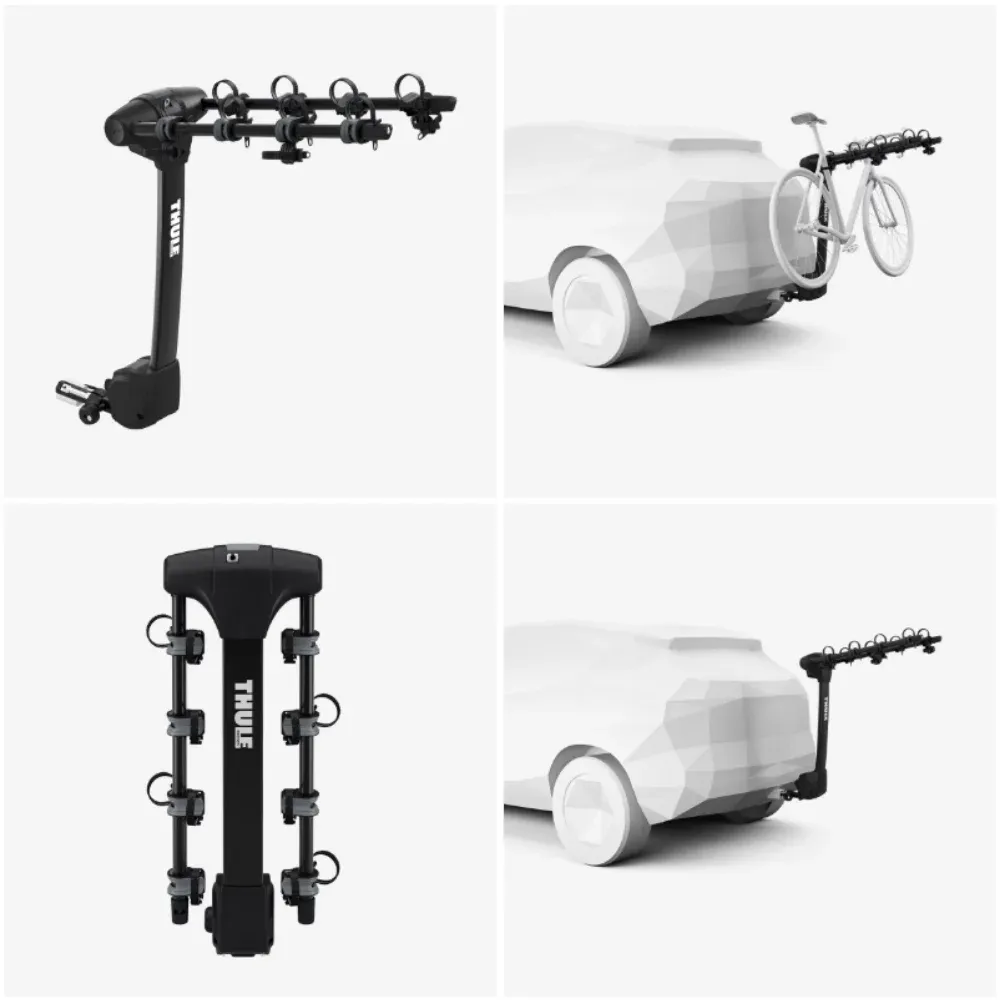
For families or group riders, the Thule Apex XT 4 offers a practical way to carry multiple bikes without stepping into premium pricing.
Its hanging design allows you to transport up to four bikes while keeping the rack relatively lightweight and easy to install. This makes it a popular choice for casual use and weekend trips.
- Carries up to 4 bikes
- Lightweight and easy install
- Foldable arms
- Integrated cable lock
While it doesn’t match platform rack stability, it performs well for its price.
- Frame contact limitations
- More bike movement
Best for: Families or occasional riders.
How to Choose the Right Hitch Bike Rack
Choosing the right hitch bike rack isn’t just about capacity, it’s about how you ride, what you drive, and how often you’ll actually use it. The “best” rack on paper can quickly become frustrating if it doesn’t match your day-to-day needs. Here’s how to think through the key factors before you buy.
Platform vs Hanging Racks
This is the first and most important decision.
Platform racks hold bikes by the wheels, which means zero frame contact. This makes them the go-to choice for modern bikes; especially carbon frames, mountain bikes, and e-bikes. They’re significantly more stable on rough roads and at highway speeds, and bikes don’t sway into each other as much.
Hanging racks, on the other hand, suspend bikes by the frame. They’re lighter, more compact, and usually more affordable. However, they can lead to frame rub, require adapters for certain bike styles (like step-through frames), and tend to have more movement during transport.
- Choose platform if you ride frequently, own expensive bikes, or value stability.
- Choose hanging if you need a simple, budget-friendly option for casual use.
Hitch Size Compatibility
Not all hitches are created equal, and this directly impacts which racks you can use.
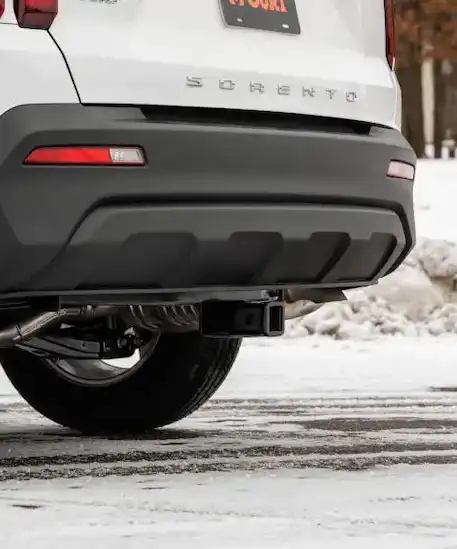
Most vehicles come with either a 1.25” or 2” receiver. While many racks are available in both sizes, 2” hitches are generally preferred because they offer better weight capacity and less wobble especially important for heavier bikes or long-distance travel.
- 1.25” hitch: Common on sedans and smaller SUVs; suitable for lighter, 2-bike racks.
- 2” hitch: Standard on SUVs, trucks, and vans; ideal for heavier loads and 3–4 bike setups.
Pro tip: If you plan to upgrade to heavier bikes (like e-bikes), investing in a 2” hitch setup now can save you from replacing your rack later.
Bike Capacity & Weight Limits
It’s easy to focus on how many bikes a rack can carry, but weight matters just as much as quantity.
E-bikes can weigh significantly more than traditional bikes, often pushing the limits of standard racks. Even if a rack says it carries “2 bikes,” that doesn’t always mean it can safely handle two heavy e-bikes.
- Check per-bike weight limits, not just total capacity
- Look for racks specifically rated for e-bike use if needed
- Consider future needs, buying a slightly higher-capacity rack can prevent upgrading later
Real-world tip: Loading heavier bikes repeatedly can get tiring features like ramps or lower loading heights can make a huge difference over time.
Security Features
If you’re traveling, stopping for food, or parking in public areas, security becomes essential.
Most quality racks include integrated locking systems that secure both the rack to your vehicle and your bikes to the rack. While these aren’t completely theft-proof, they act as a strong deterrent for opportunistic theft.
- Hitch lock: Prevents the rack from being removed
- Cable or arm locks: Secures bikes to the rack
Pro tip: For high-value bikes, consider adding an extra lock for peace of mind especially during overnight stops.
Ease of Use (Where Most Racks Win or Lose)
This is the category most riders underestimate and the one that impacts your experience the most.
A rack might look great on paper, but if it’s difficult to load, awkward to store, or frustrating to install, you’ll feel it every single trip.
- Tilt function: Lets you access your trunk without removing bikes
- Foldability: Makes storage easier when not in use
- Tool-free install: Saves time and simplifies setup
- Loading height: Lower platforms are easier for heavier bikes
Real-world tip: If you ride often, small conveniences like quick-release arms or one-handed operation quickly become must-have features rather than luxuries.
Bottom line: The right hitch bike rack is the one that fits your lifestyle, not just your vehicle. Think about how often you ride, the type of bikes you own, and how much effort you want to put into loading and unloading. Getting this right upfront will save you time, money, and frustration down the road.
Why Summer 2026 Is the Best Time to Upgrade
Cycling continues to grow in popularity, and manufacturers are responding with more refined, user-friendly designs. From improved e-bike compatibility to smarter loading systems, today’s racks are more capable than ever.
If you’re planning road trips, trail visits, or family outings, upgrading your bike rack now ensures a smoother, stress-free experience all summer long.
Frequently Asked Questions
1) What is the best hitch bike rack for e-bikes?
The best rack for e-bikes is one that’s specifically designed to handle higher weight loads and wider tire sizes. Models like the Thule EasyFold XT stand out because they combine a high per-bike weight capacity with a stable platform design.
That said, the “best” option depends on how you use it:
- Frequent use / heavier e-bikes: Look for high-capacity platform racks with ramps or easy loading features
- Storage concerns: Foldable racks make a big difference in garages or small spaces
- Travel / long distances: Stability and minimal bike movement matter most
Key tip: Always check the per-bike weight rating many standard racks won’t safely support two full-weight e-bikes.
2) Are platform racks better than hanging racks?
For most modern riders, yes, but it depends on what you prioritize.
Platform racks are generally better because they:
- Hold bikes by the wheels (no frame contact)
- Provide better stability at highway speeds
- Work with a wider range of bikes (carbon, MTB, e-bikes)
Hanging racks still make sense if you:
- Need to carry more bikes on a budget
- Want something lighter and easier to store
- Ride casually and don’t mind frame contact
Bottom line: Platform racks are the better long-term investment for most riders, especially if your bikes are valuable or uniquely shaped.
3) Can I open my trunk with a bike rack installed?
In most cases, yes, but it depends on the rack design.
Many mid-range and premium racks include a tilt or swing-away feature that lets you access your trunk or hatch without removing the bikes. However, there are a few important nuances:
- Tilt racks: Allow partial access, great for quick loading/unloading
- Swing-away racks: Offer full rear access but are heavier and more expensive
- Vehicle differences: Larger SUVs and vans typically have better clearance than sedans
Real-world tip: Access is easiest when the rack is unloaded. With bikes on, clearance can be tighter especially with longer handlebars or larger frames.
4) Do hitch bike racks damage bikes?
They can, but the risk depends heavily on the rack style and how it’s used.
Platform racks (especially wheel-mount designs) significantly reduce the risk because they avoid frame contact and keep bikes more stable.
Hanging racks can cause:
- Frame rub or scratches (especially on long drives)
- Bike-to-bike contact if spacing is tight
- Compatibility issues with certain frame shapes
How to minimize risk:
- Use frame protection or padding if needed
- Secure bikes tightly to prevent movement
- Avoid overloading or improper positioning
Bottom line: With the right rack and proper setup, damage is very unlikely, but cheaper or poorly fitted setups increase the risk.
5) What size hitch do I need?
This depends on your vehicle, but choosing the right size has a big impact on stability and future flexibility.
- 1.25” hitch: Common on smaller cars and compact SUVs; suitable for lighter 1–2 bike racks
- 2” hitch: Standard on SUVs, trucks, and vans; supports heavier racks, more bikes, and better stability
Why 2” is often recommended:
- Higher weight capacity (important for e-bikes)
- Less wobble during driving
- More compatibility with premium racks
Pro tip: If your vehicle supports it, go with a 2” hitch it gives you more options now and in the future as your biking needs evolve.
Final Thoughts
Choosing the right hitch bike rack comes down to how you ride, what you drive, and how many bikes you need to carry.
For most riders, the Thule T2 Pro XTR remains the best all-around choice. But if you’re looking for something more specialized whether it’s for e-bikes, family trips, or premium design there’s a perfect option in this list.



