





January 16, 2026

Rack Attack Team
If you own a pickup truck, the bed is your greatest asset. It is the reason you bought the vehicle in the first place to haul lumber for a deck, tow the family boat, or toss muddy camping gear in the back without wrecking your interior. But that open bed is also your truck's biggest vulnerability. Leaving your bed exposed means inviting rust from rain and snow, fading from harsh UV rays, and perhaps most concerning, providing an easy target for opportunistic thieves. In 2026, a pickup truck without a cover is like a house without a front door: functional, but risky.
This is where the tonneau cover (also known as a truck bed cover) comes in. While the concept is simple a lid for your truck bed the technology has evolved significantly. Modern covers are no longer just snapping vinyl sheets; they are engineered systems designed for high-security, aerodynamic efficiency, and seamless integration with overland racks. Whether you are a contractor looking for a hard folding tonneau cover to protect thousands of dollars in tools, or an outdoor enthusiast needing a retractable tonneau cover that works with your kayak rack, this guide is your roadmap.
What is a Tonneau Cover? (A Brief History)
First, let's address the name. "Tonneau" (pronounced tah-no) is a French term referring to a "cask" or "barrel." In the early days of automotive history, it referred to the rear passenger compartment of a vehicle, which was often rounded like a barrel. When those seats weren't in use, drivers would snap a canvas cover over them to protect the leather from the elements. Today, the term has migrated exclusively to pickup trucks.
A modern tonneau cover is a hard or soft enclosure that spans the length of the truck bed, sealing it off from the outside world. They attach to the bed rails (the top metal edge of your truck box) using clamps or bolts, creating a secure cargo area that is often safer than the cab itself.
The Three Core Functions
Regardless of the price point, every cover aims to solve three problems:
- Security: Keeping your gear out of sight and locked away.
- Weather Protection: Shielding your cargo from rain, snow, and dirt.
- Aerodynamics: Reducing drag to improve fuel economy.
The Physics of MPG (Do They Actually Save Gas?)
This is the single most common question we get at the shop: “Does a tonneau cover improve gas mileage?” For years, this was debated on forums with anecdotal evidence. But we now have wind tunnel data to give us a definitive answer.
The Aerodynamic Reality: When you drive an open-bed pickup truck at highway speeds, the air flows over the windshield and roof, then crashes down into the empty bed. This air hits the tailgate and swirls around, creating a zone of high-pressure turbulence known as a "drag bucket." This turbulence acts like a parachute, pulling the truck backward and forcing your engine to work harder to maintain speed.
The Myth of the "Tailgate Down": Many drivers believe that lowering the tailgate solves this. This is false. Wind tunnel tests (and the famous Mythbusters episode) proved that driving with the tailgate down actually increases drag. The tailgate, when closed, creates a rotating bubble of air inside the bed. The fast-moving air coming off the roof skims over this bubble rather than crashing into the bed. Lowering the tailgate destroys this bubble, increasing drag.
The Data-Backed Solution: A tonneau cover is the ultimate aerodynamic fix. By sealing the bed, it creates a smooth surface for the air to slide off the vehicle, mimicking the aerodynamics of an SUV. According to studies by SEMA (Specialty Equipment Market Association), adding a tonneau cover can reduce aerodynamic drag by approximately 5.73% on average.
- City Driving: Negligible difference.
- Highway Driving: Significant difference. Over the life of a truck (100,000+ miles), this reduction in drag improves efficiency enough to help offset the cost of the cover.
Comprehensive Breakdown of Styles
The market is flooded with options, which can be overwhelming. To find the "best" cover, you need to ignore the flashy marketing names and focus on the mechanics. How do you use your truck? Do you need instant access, or maximum security?
| Cover Type | Pros | Cons |
|---|---|---|
| Soft Roll-Up | 100% Bed access, budget friendly, low profile look. | Minimal security; vinyl can be easily cut. |
| Hard Folding | Maximum security, weight capacity (up to 400 lbs). | Blocks rear window when fully folded up. |
| Retractable | Versatility (locks in any position), sleek slatted design. | Canister takes up 10-12" of bed space. |
| Hard Roll-Up | Security of a hard cover with zero window obstruction. | More expensive than standard soft options. |
1. Soft Roll-Up Tonneau Covers
These are the most popular entry-level covers. They consist of a heavy-duty, marine-grade vinyl tarp mounted on aluminum rails. To open them, you simply unlock the latch at the tailgate and roll the vinyl toward the cab, securing it with straps.
- Pros: 100% Bed Access; Budget Friendly ($300-$600 range); Low Profile.
- Cons: Security is minimal. While they keep honest people honest, a sharp knife can slice through the vinyl in seconds.
- The "Locking" Question: While the frame locks when you lock your tailgate, the vinyl itself cannot be physically locked.
2. Hard Folding (Tri-Fold) Covers
This is the industry standard for security. These covers are built with rigid panels—usually aluminum or composite—that fold back in sections (usually three).
- Pros: Maximum Security (acts like a vault when the tailgate is locked); Weight Capacity (premium models like the BAKFlip MX4 support 400 lbs).
- Cons: Rear Visibility. To access 100% of your bed, you fold the panels against the rear window, blocking your view.
3. Retractable Tonneau Covers
These covers feature a "slatted" design that rolls into a canister mounted at the front of the bed, similar to a garage door.
- Pros: Versatility (lock at any position); Ease of Use (glides on sealed ball bearings).
- Cons: Bed Space. The canister takes up about 10-12 inches of space at the front of the bed.
4. Hard Roll-Up Covers (The Hybrid)
Imagine a soft roll-up cover, but underneath the vinyl, there are heavy-duty aluminum slats. This offers the security of a hard cover but rolls up completely to the cab, so it doesn't block your rear window. Top Pick: The BAK Revolver series.
5. One-Piece / Hinged Covers
Solid fiberglass or plastic lids painted to match your truck. They lift up on hinges like a car trunk. They offer the best weather protection but severely limit utility as they must be removed entirely to haul large items.
Material Science (Vinyl vs. Aluminum vs. Polycarbonate)
The longevity of your cover depends entirely on what it is made of:
- Marine-Grade Vinyl: Used on soft covers. Requires UV protectant spray every few months. Lifespan: 5-7 years.
- Aircraft-Grade Aluminum: Used on hard folding and premium retractables. Extremely durable and powder-coated to resist scratches.
- Polycarbonate: Used on lighter retractable covers. Impact resistant and immune to dents, with a 200 lb weight capacity.
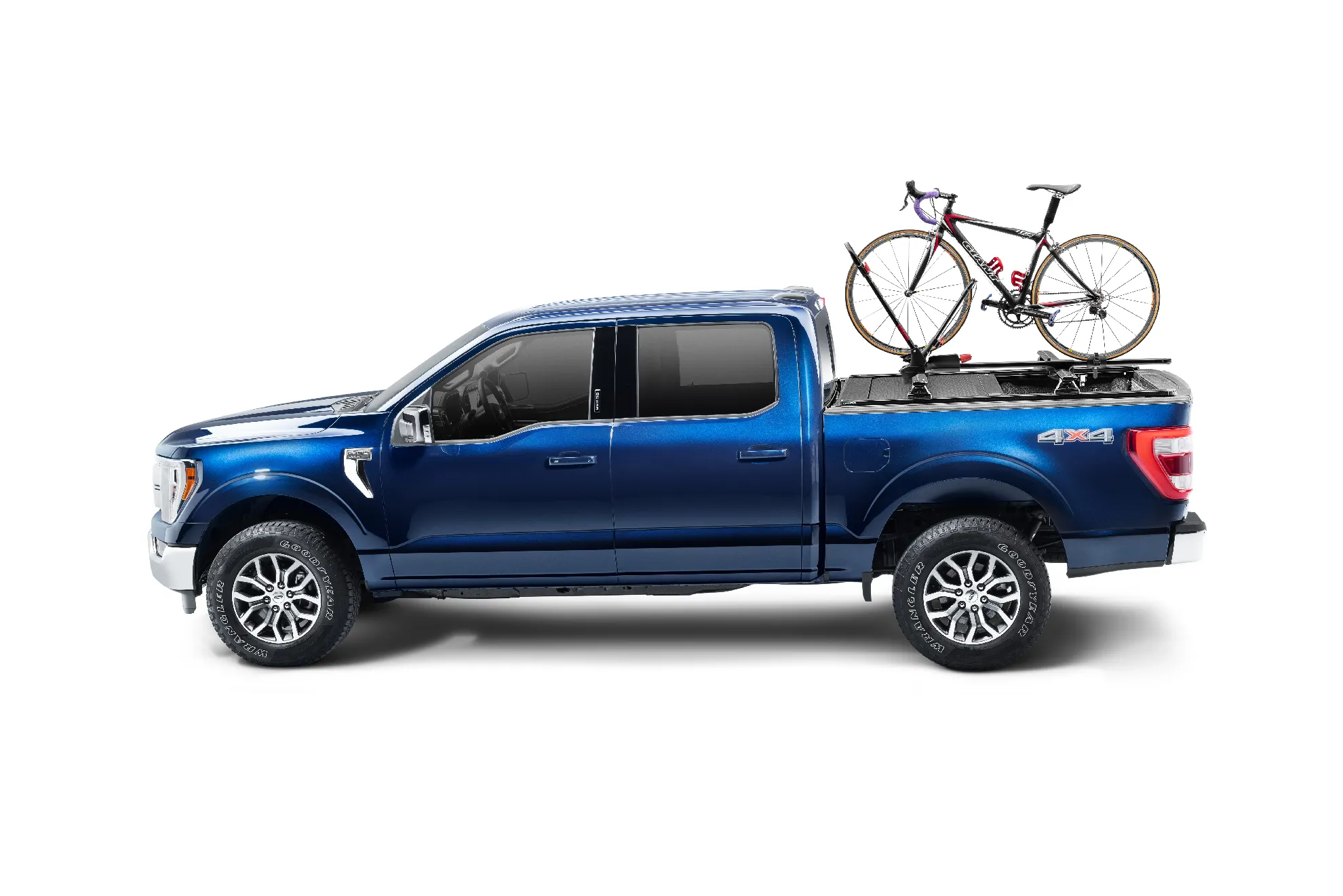
The "Rack Attack" Advantage (Overlanding & T-Slots)
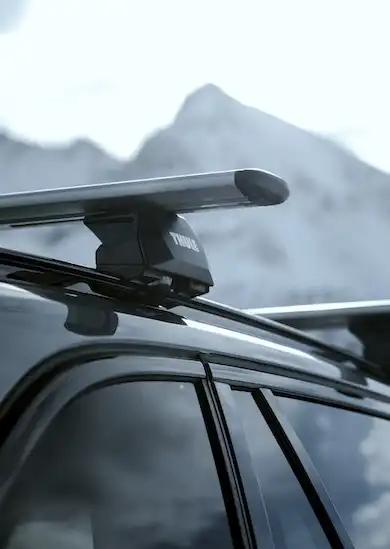
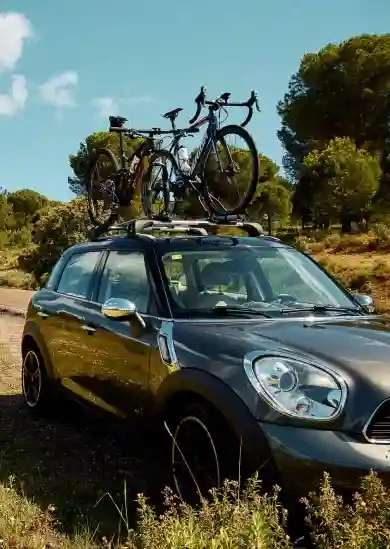
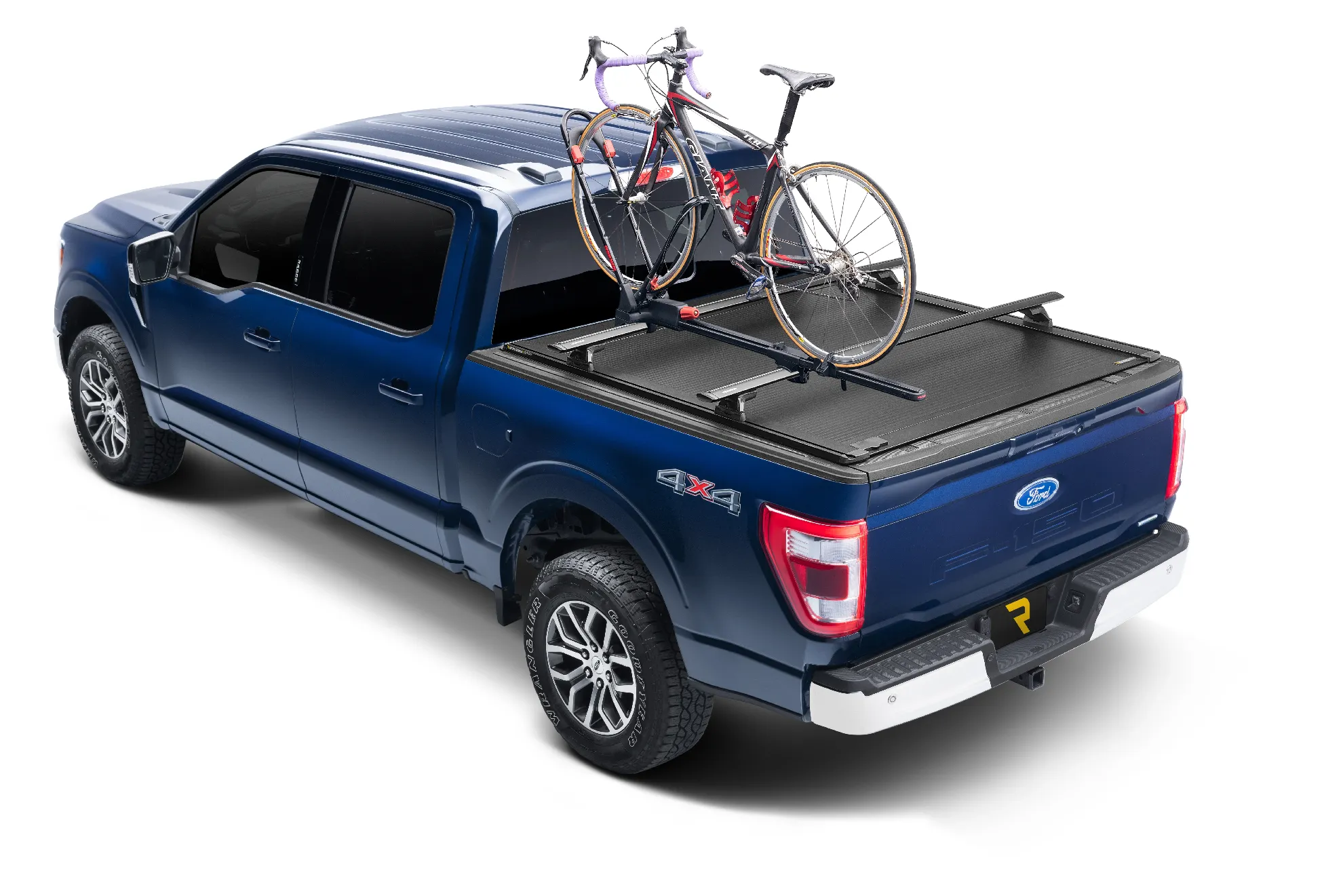
In the past, you had to choose: tonneau cover OR truck rack? The Solution: T-Slot Rails. Premium covers now feature integrated T-Slot tracks running along the side rails. This allows you to mount rack towers (Thule, Yakima, Rhino-Rack) directly onto the cover rails. You can keep your gear locked inside the bed while your tent or bikes are mounted above. Best Systems: RetraxPRO XR and Roll-N-Lock XT.
Weatherproofing & "Waterproof" Myths
A pickup truck bed is not a submarine. It has factory drain holes and gaps. No cover is 100% waterproof, but high-quality covers are highly weather-resistant using EPDM rubber seals and internal gutters with drain tubes.
The Car Wash Test: Expect a little water near the tailgate in high-pressure touchless washes. For normal rainfall and highway driving, your gear will stay dry.
Installation & Measurement Guide
90% of the covers we sell are "Clamp-On" designs that require zero drilling.
Step 1: How to Measure
1. Lower your tailgate.
2. Measure from the inside of the bulkhead (front wall) to the inside of the tailgate.
3. Round to the nearest inch (5' 7", 6' 4", 8').
Step 2: The 20-Minute Install
Clean bed rails with alcohol, align the side rails, ensuring they are level with the tailgate, and tighten the clamps evenly. Test 3-4 times for a smooth latch.
Security Analysis
- Soft Covers: Visual security only. Thieves can't see it, but they can cut it.
- Hard Covers: Physical deterrent. Cannot be opened without opening the tailgate.
- The Weak Link: Your Tailgate. If your tailgate does not lock, your cover provides NO security. Install a Pop & Lock if you have an older truck.
Maintenance & Care
- Winter Care: Clear ice/snow off retractable canisters before opening to protect the gears.
- Lubrication: Spray retractable rails with a dry silicone spray (never grease or WD-40) twice a year.
- Vinyl Care: Use dedicated cleaners with UV inhibitors and avoid automated car wash waxes.
Conclusion: Which Cover is Right for You?
- Choose a Soft Roll-Up IF: You are on a budget and need 100% bed access frequently.
- Choose a Hard Folding IF: Security is your priority and you handle heavy snow loads.
- Choose a Retractable IF: You want the easiest operation and plan to add an overland rack system.
Ready to find the perfect fit? Use our "Fit My Vehicle" tool to see exactly what works for your truck.



