



April 19, 2022

Rack Attack Team
Choosing between the Thule Edge and Thule Evo roof rack systems seems simple at first but it quickly becomes complicated once you start factoring in real-world use. Both systems are built on Thule’s premium platform, utilizing high-grade aluminum and the aerodynamic WindBar profile. Both are compatible with the One-Key System and a massive ecosystem of accessories. Both are engineered for safety, durability, and top-tier aerodynamic performance.
But they are not designed for the same type of user. The real decision isn’t just: “Which one is better?” It’s: “Which one fits how I actually use my vehicle?” Because the difference between these two systems shows up most when you start loading them with gear; kayaks, cargo boxes, bikes, skis, or even rooftop tents. This guide breaks down everything in detail from engineering design to real-world applications so you can make the right choice with confidence.
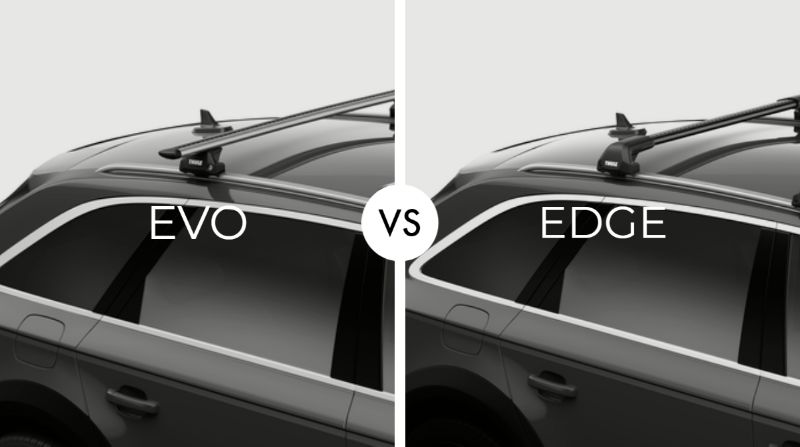
Quick Verdict
If you want the clearest possible recommendation:
Choose Thule Edge if:
- You care about a flush, factory-style appearance: The bars end inside the feet, creating a seamless look that mimics high-end OEM racks.
- You mainly carry one accessory at a time: Its compact footprint is perfect for a single cargo box or a pair of bike racks.
- Your loads are relatively light to moderate: Optimized for standard travel gear and weekend sports.
- You value simplicity and clean design: It stays out of the way, both visually and physically.
Choose Thule Evo if:
- You need maximum carrying flexibility: The "through-bar" design gives you every inch of the bar’s width to work with.
- You plan to carry multiple accessories simultaneously: The only choice if you need a cargo box and a bike rack on the same roof.
- You’re transporting heavier or bulkier gear: Better leverage for wide items like kayaks or heavy rooftop tents.
- You want a system that can adapt over time: Easier to transfer to a new vehicle with different roof widths.
Bottom line: Edge is optimized for design and simplicity. Evo is optimized for function and versatility.
Understanding the Core Difference
At a surface level, the difference is often described as Edge = flush bars and Evo = extended bars. That’s true but it’s also an oversimplification that misses the mechanical reality.
The Real Difference:
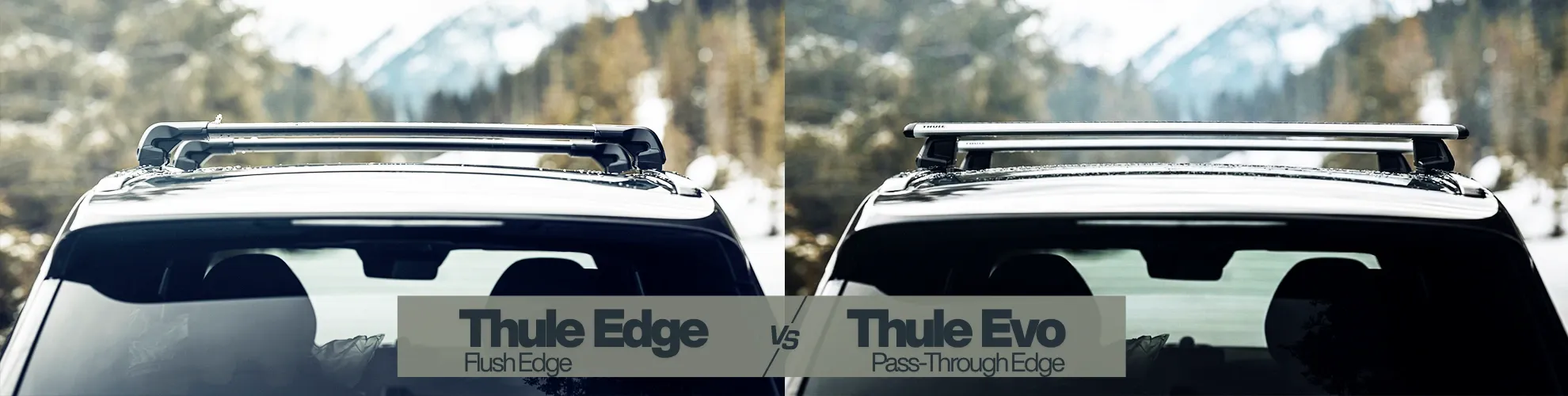
- Thule Edge is an integrated system: The bar and foot function as a single, aerodynamic unit.
- Thule Evo is a modular system: The bar and foot are separate components that "clamp" together, allowing the bar to slide through.
This distinction affects everything:
- Load capacity: Evo handles off-center weight better due to its structural "overhang."
- Accessory compatibility: Edge can be too narrow for wide-base mounts.
- Ease of expansion: Evo allows you to "upsize" your bars without replacing the feet.
- Long-term usability: Evo is significantly more "future-proof" when you change vehicles.
Design Philosophy: Integrated vs Modular
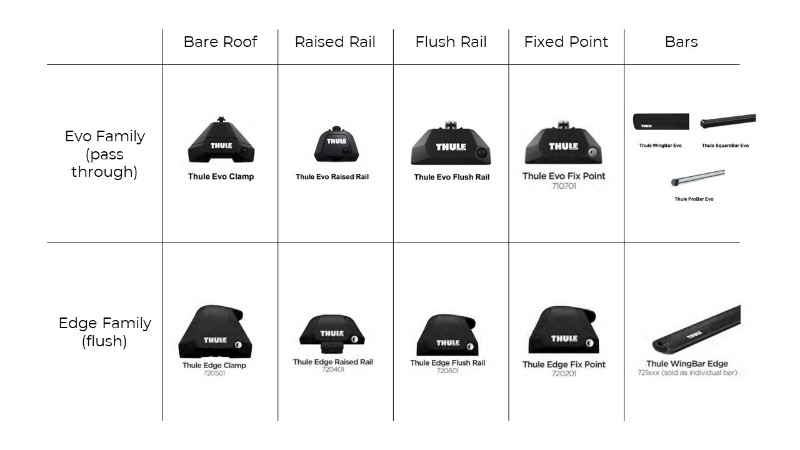
Thule Edge: Integrated Design
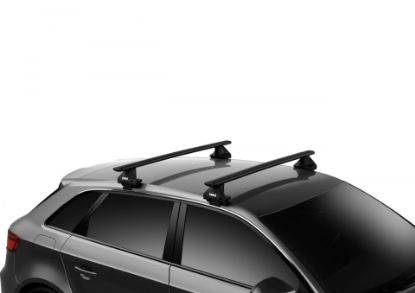
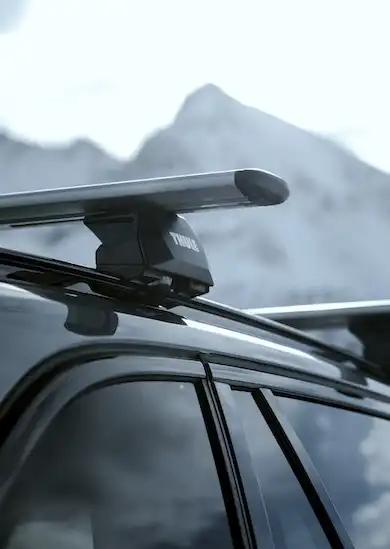
The Edge system is designed to look like it came with your car. The bars sit flush with the feet, meaning there is no overhang beyond the vehicle width. The visual profile is low, streamlined, and tucks into the roofline.
Pros: Cleaner aesthetics that don't disrupt the car’s silhouette; slightly reduced visual bulk; and zero chance of hitting your head on protruding bar ends when leaning into the car.
Cons: Strictly limited usable width (you lose 4–6 inches of mounting space on each side) and less flexibility for mounting multiple bulky accessories.
Verdict: It’s a “what you see is what you get” system.
Thule Evo: Modular Design
The Evo system prioritizes function over form. The crossbars extend beyond the mounting feet, and because they are modular, you can actually choose different bar lengths to suit your specific needs.
Pros: Much more usable bar space; greater flexibility for "outboarding" gear; and the ability to mount accessories directly over the feet.
Cons: A more utilitarian, "aftermarket" appearance and a slightly bulkier profile that may catch more wind at high speeds.
Verdict: It’s designed for people who treat their roof rack as a tool not just an accessory.
Crossbar Engineering: What Actually Matters
Both systems typically use Thule’s WingBar technology (an airfoil shape that reduces drag), but how those bars function in practice differs significantly.
Width & Usable Space
This is the most overlooked factor during purchase.
- Edge (Fixed width): Your mounting space is capped by the distance between your roof rails.
- Evo (Extendable): You can install a wider bar than the car "needs," creating extra room for gear.
Why it matters: If you want to mount a Cargo Box AND a Bike Rack, the Edge will often run out of room, forcing you to choose one or the other. The Evo allows you to space them out properly.
T-Track vs Clamp Mounting
Both systems support T-track mounting (sliding bolts into the top of the bar), but the Evo gives you more room to slide and adjust accessories horizontally. The Edge can feel constrained when positioning mounts because you cannot slide the accessory "past" the foot of the rack. This is vital when aligning cargo boxes to ensure they don't interfere with the rear hatch.
Structural Load Distribution
Because Evo bars extend outward, weight can be distributed across a wider area, preventing "crowding" at the center of the bar. Edge systems concentrate the entire load within a narrower footprint.
Note: This doesn’t make Edge unsafe, but it limits how efficiently you can balance a heavy, multi-item load.
Load Capacity: Numbers vs Reality
On paper, both systems are rated for high weight limits (usually up to 75kg / 165lbs), but their real-world performance varies.
- Thule Evo: Better suited for heavier loads. It handles multi-item setups more confidently because the weight is spread across a longer beam. This is the preferred choice for outdoor-heavy lifestyles.
- Thule Edge: Strong enough for most everyday gear (skis, a single bike, or a medium box), but not ideal for maxed-out, heavy configurations.
Static vs Dynamic Load
- Dynamic load: The weight the rack can hold while the car is moving.
- Static load: The weight the rack can hold when the car is parked (crucial for rooftop tents).
Winner: Evo systems are generally more compatible with Rooftop Tents because the "through-bar" design provides a more stable foundation for the tent's mounting tracks.
Real-World Use Cases
1. Kayaks & Paddleboards
Transporting kayaks requires stable mounting points and enough width for cradles.
- Thule Evo excels: Wider bars allow you to mount J-cradles further apart, making it easier to carry two boats side-by-side.
- Edge limitations: The limited space often makes multi-kayak setups physically impossible.
Verdict: Evo is significantly better.
2. Rooftop Tents
The most demanding use case for any rack.
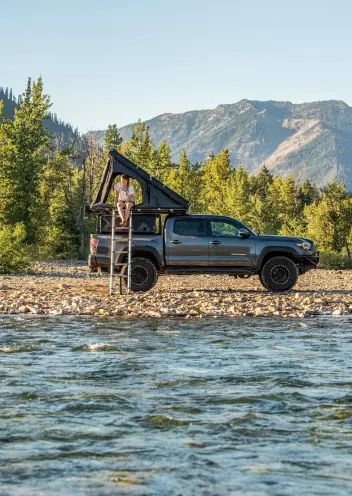
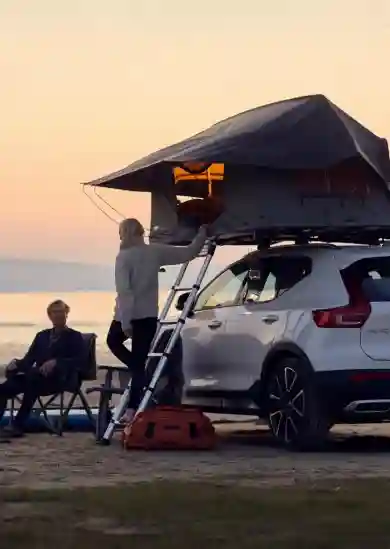
- Thule Evo: Designed to handle the high static loads of campers. The extended bars offer a better weight distribution and fit the wide mounting bases of most tents.
- Thule Edge: Generally not recommended for tents. The integrated feet are not designed for the lateral stress a tent creates.
Verdict: Evo, no contest.
3. Cargo Boxes
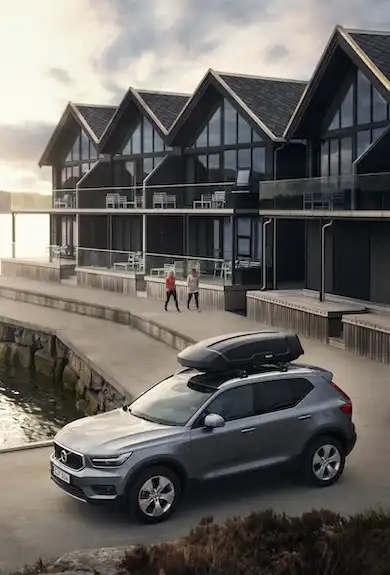
- Thule Edge: Provides a much cleaner visual integration, making the box look like a part of the car. It’s perfect for single-box setups.
- Thule Evo: Offers more flexibility in positioning the box to one side to leave room for other gear.
Verdict: Tie (Edge wins for looks, Evo for flexibility).
4. Bike Racks
- Single bike: Both systems work flawlessly.
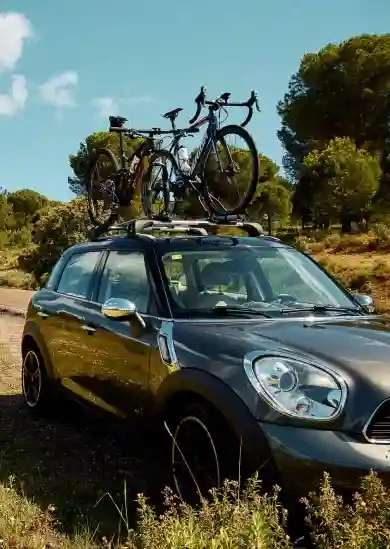
- Multiple bikes: Evo is the clear winner because the extra bar overhang allows you to stagger the bikes or add a third or fourth rack that wouldn't fit on the Edge.
5. Ski & Snow Gear
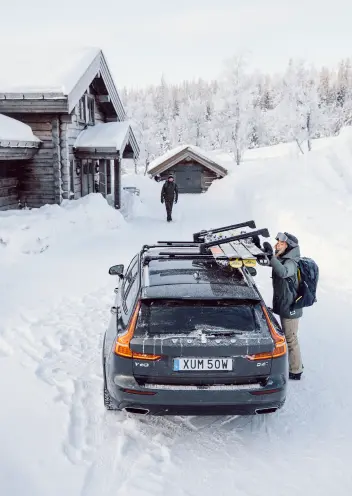
Winter setups are bulky. The Evo advantage here is the ability to combine a ski rack with a cargo box for boots and helmets, a combination that is often too wide for the Edge.
Vehicle Compatibility Considerations
- SUVs & Crossovers: Evo is generally more practical. A larger roof has more surface area to benefit from extended bars.
- Sedans: Edge often looks better. The lower profile complements the sleek shape of a sedan.
- Wagons & Hatchbacks: Either works well; the decision depends entirely on your usage intensity.
Understanding Your Roof Type
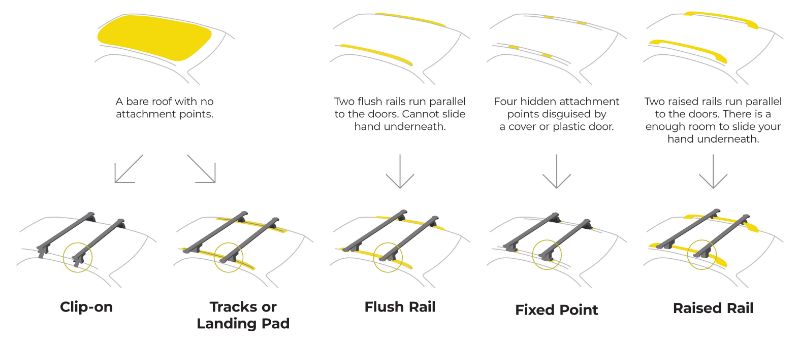
Before picking between Edge and Evo, you must identify your vehicle's roof type. Thule has modernized their entire lineup to ensure both Edge and Evo work on almost any vehicle.
Bare Roof Racks
Bare roofs are some of the most common vehicle roof options on the market, and many customers mistakenly think they have no options for a roof rack. That's where they're wrong; clamp systems have been around for decades and are continually getting better. Using vehicle-specific clips and rubber pads, clamp systems are reliable and sturdy while using every precaution to avoid scratching your vehicle.
The Updated Bare Roof Options:
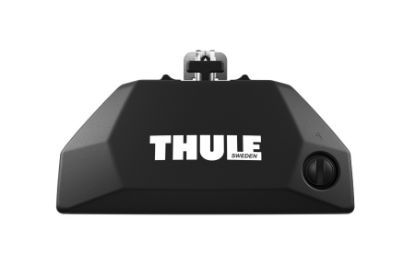
- Thule Evo Clamp + Thule Wingbar Evo + a vehicle-specific fit kit
- Thule Edge Clamp + Thule Wingbar Edge + a vehicle-specific fit kit
Replacing: Thule Rapid Traverse (480R) and Thule Traverse (480).
Alternatives: Yakima BaseLine, Rhino-Rack 2500, Yakima Q-Tower (discontinued).
Raised Rail Racks
As overlanding rises in popularity, more manufacturers are adding raised rails to increase vehicle capability. These often have the highest weight capacity and are the easiest to remove/install. Once you choose the crossbars, you simply pick either the Evo or Edge Raised Rail foot.
The Updated Raised Rail Options:
Replacing: Thule Rapid Crossroad (450R), Thule Crossroad (450 - discontinued), and Thule AeroBlade Edge Raised Rail.
Alternatives: Yakima TimberLine, Yakima RailGrab (discontinued), Rhino-Rack SX tower.
Fixed Point Racks
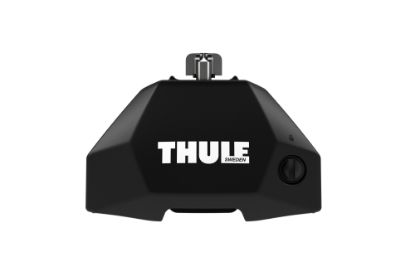
Fixed point racks work when the manufacturer builds mounting points directly into the roof (often hidden under a small door or trim). These are exceptionally secure. The new Evo/Edge Fixpoint systems feature a convenient on/off mechanism that leaves the fit kit attached while allowing the rack to be removed in seconds.
The Updated Fixed Point Options:
Replacing: Thule Rapid Podium (460R) and Thule Podium (460 - discontinued).
Alternatives: Yakima SkyLine, Rhino-Rack Quick Mount Leg, Yakima Control towers (discontinued).
Flush Rail Racks
Flush rails are now standard on most modern SUVs and wagons. They offer a subtle appearance and high usability. Thule's Evo and Edge Flush Rails are top-of-class, offering a low-profile design and a simple on-off mechanism.
The Updated Flush Rail Options:
Replacing: Thule Rapid Podium (460R) and Thule Podium (460 - discontinued).
Alternatives: Yakima RidgeLine, Rhino-Rack RCH towers.
Wind Noise & Aerodynamics
Both systems use aerodynamic "wing" shapes, so the differences are subtle.
Edge Advantage: It is technically the quietest rack Thule makes because there are no open bar ends to create turbulence.
Evo Reality: While it has more surface area, the noise difference is minimal at standard highway speeds.
Bottom Line: Don’t choose based on noise alone; the difference is negligible once you put a rack on top.
Installation & Adjustability
Thule Edge: Often comes with pre-sized bars, making installation faster and requiring less measuring.
Thule Evo: Offers more setup flexibility. You can adjust how far the bars "peek out" from the feet, but the initial install is slightly more complex.
Verdict: Edge is simpler; Evo is more customizable.
Long-Term Flexibility
Edge: Works great until your needs grow. If you buy a wider car or a second kayak, you may have to replace the entire system.
Evo: Built to adapt. You can swap bars for longer ones or move the system to a new car with a simple $60 fit kit.
Verdict: If you plan to expand your setup, Evo saves money long-term.
Pros and Cons
Thule Edge
- Pros: Sleek design; Quietest ride; "OEM" factory look.
- Cons: Limited space; Low transferability to new cars; Not for heavy-duty/tents.
Thule Evo
- Pros: Maximum versatility; Higher functional capacity; Easier to load; Multi-gear capable.
- Cons: Less "refined" look; Bar ends can be a bump hazard; Slightly more wind drag.
Price & Value Analysis
- Edge often carries a "style premium" and can be more expensive despite having less usable metal.
- Evo delivers better functional value per dollar because it can do more.
- Hidden cost: If you outgrow the Edge, you'll spend double to replace it. Evo reduces that risk.
Frequently Asked Questions
- Can I mix accessories between Edge and Evo? Yes, most Thule accessories are compatible with both systems as they both use the standard T-track mounting system.
- Is Edge strong enough for road trips? Absolutely for typical gear like cargo boxes or bikes. It is tested to the same rigorous safety standards as the Evo.
- Why do overlanders prefer Evo? Because of the higher functional load capacity, flexibility for mounting awnings on the overhang, and expandability for rooftop tents.
- Does Evo stick out too much? Slightly but most users adapt quickly. The overhang is usually only a few inches on each side, which many find useful as a "grab point" when loading.
- Which one lasts longer? Both are extremely durable and made of the same high-grade materials. Longevity isn’t a concern; the decision should be based on utility.
Final Thought: Most people underestimate how their needs evolve. They start with a bike rack, then add a box, then consider kayaks. Flexibility usually beats aesthetics in the long run. That’s why, for most users, Thule Evo is the smarter long-term investment.